What live music does that your headphones never will.
There is a reason recordings feel flat. And it is not the headphones.
- Opera Magazine ORPHEUS
- Suesskind Audio
- Stereophile
- Robb Report
You walk into a concert hall.
The cellist draws the first note. And something happens that has nothing to do with volume or clarity. The sound reaches you. Then it pulls you in. Your chest opens. Your breathing changes. The room itself seems to vibrate.
That feeling — that pull — is real. It is measurable. And it has a name.

Every live sound produces two forces. Conventional audio reproduces one.
Both forces exist in every live performance. Together, they create what musicians call presence — the three-dimensional quality that makes live sound feel alive. Conventional audio captures the push. It drops the pull. Cymatic Organs restore it.
- 01
Schalldruck — sound pressure
The outward push of a vibrating string or vocal cord through the air toward your ear. This is what every speaker and headphone on the market reproduces.
- 02
Klangsog — sound suction
The inward pull that follows each outward wave — drawing the listener into the tone itself. The half of sound that has been missing from recorded audio until now.
- 03
The problem
Even the finest headphones deliver a flat, one-directional version of what your ears are designed to receive. The technical specifications look perfect. The frequency response is accurate. But the experience falls short — because half the sound is missing.
- 04
The discovery
A researcher named Atmani spent years studying Cymatics — the science of how sound and vibration create physical patterns in matter. Sand on a vibrating plate arranging itself into geometric shapes. That is Cymatics.
- 05
The Cymatic Organ
Atmani found that acoustic components can be hand-modified to reproduce both Schalldruck and Klangsog simultaneously. He called these components Cymatic Organs.
- 06
The result
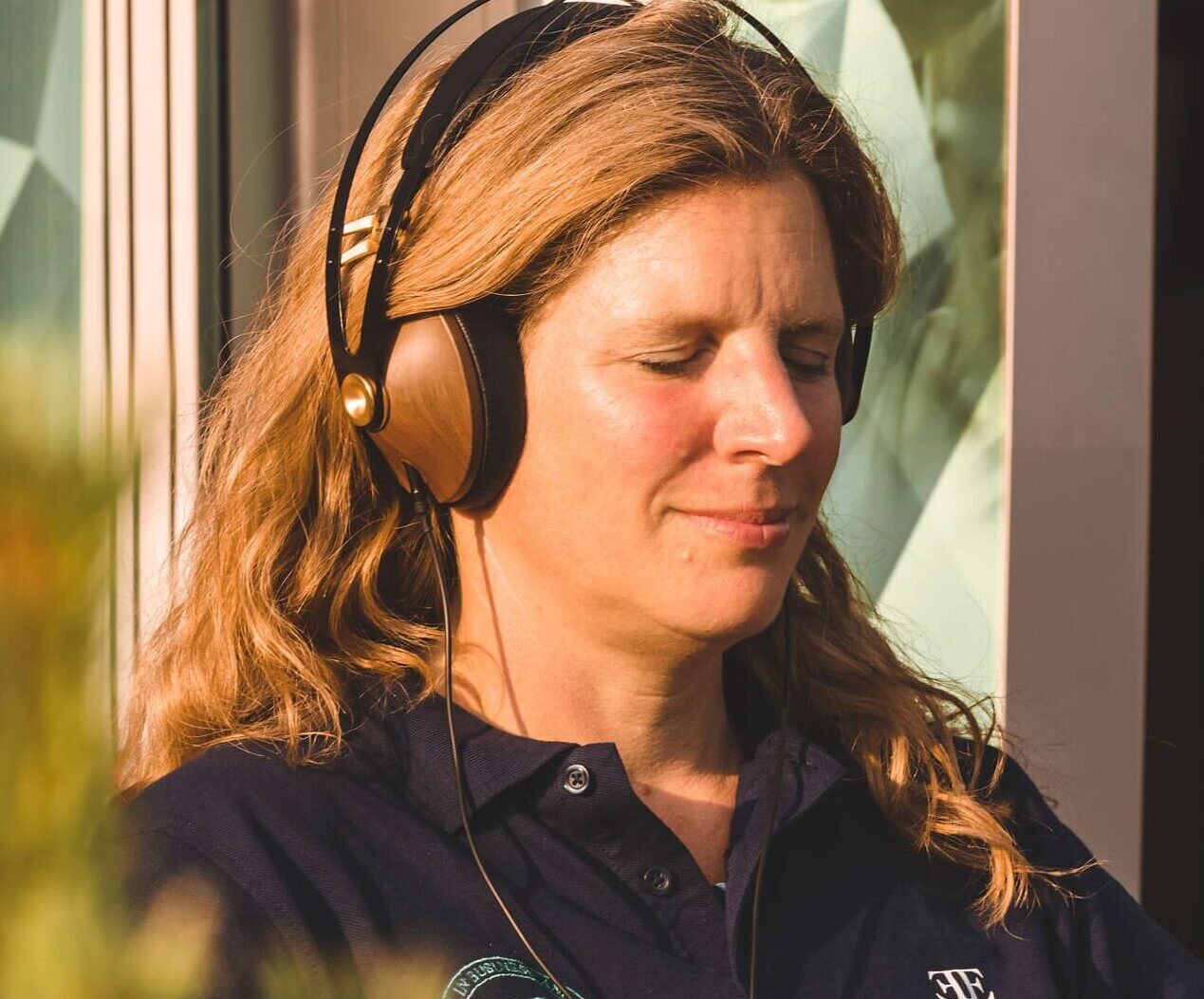
When someone puts on a pair of headphones fitted with Cymatic Organs for the first time, they tend to go quiet. Not because the bass hits harder. The music feels present. Dimensional. Like the performer is three feet away, playing into the room you are sitting in.

Like Dolby — for live music.
Dolby
Dolby did not build theaters. Dolby developed a way of processing sound that transformed what existing theaters could deliver.
Lautsänger
Lautsänger does not build headphones. Lautsänger developed a sound technology — the Cymatic Organ — applied by hand to existing headphones and speaker systems.
The product is the modification. Not the hardware. A scientist building what the science demands.
Twelve minutes of listening reduced arterial stiffness to deep-sleep levels.
A double-blind study, conducted with Lautsänger-modified systems.
"The investment in Lautsänger headphones can be called a preventive health measure without exaggeration." — Gerhard Schumacher, CEO, inmediQ GmbH.

-
The most immediate sound reproduction, which comes closest to real experience of prime acoustic at the best place in the concert hall.
-
The headphones reproduce things I have never heard before. They open up rooms.
-
As if by itself, any distance between performer and listener seems to dissolve into a feeling of closeness.
-
Before I knew Lautsänger, I had never heard of cymatics. The detachment from the transducer is astonishing.
Tonalitá is the exclusive North American distributor of Lautsänger. Every modification is done by hand, one pair at a time, in a small workshop in Hirschhorn am Neckar, Germany — by the team Atmani founded in 2019.
Meet the Challenge.
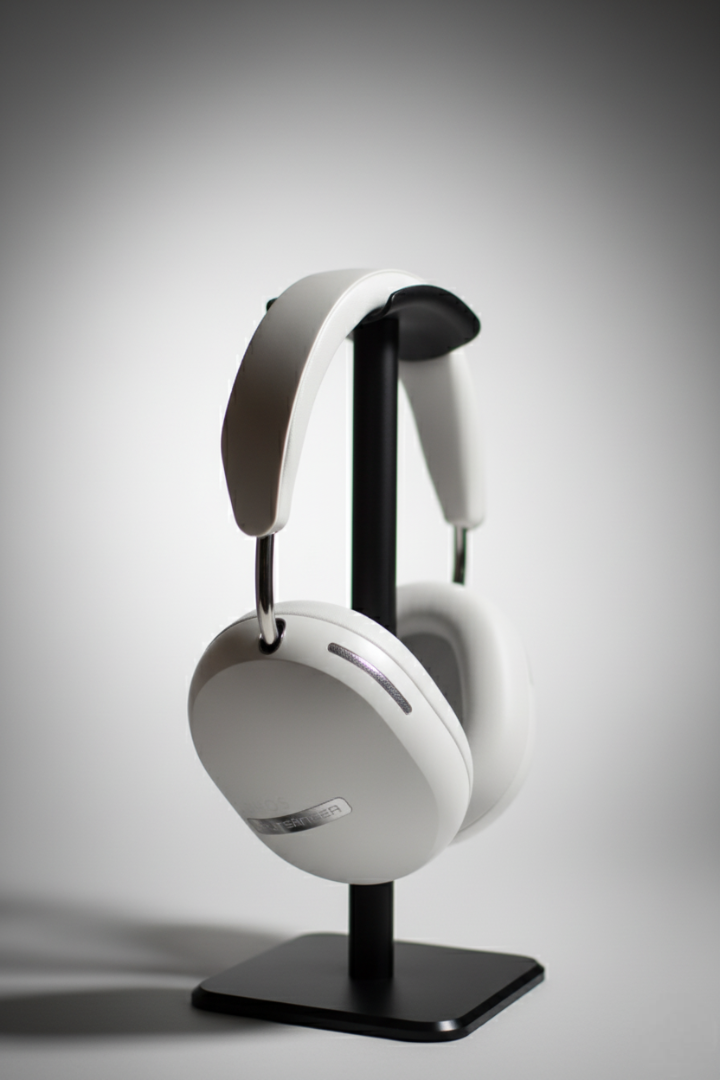
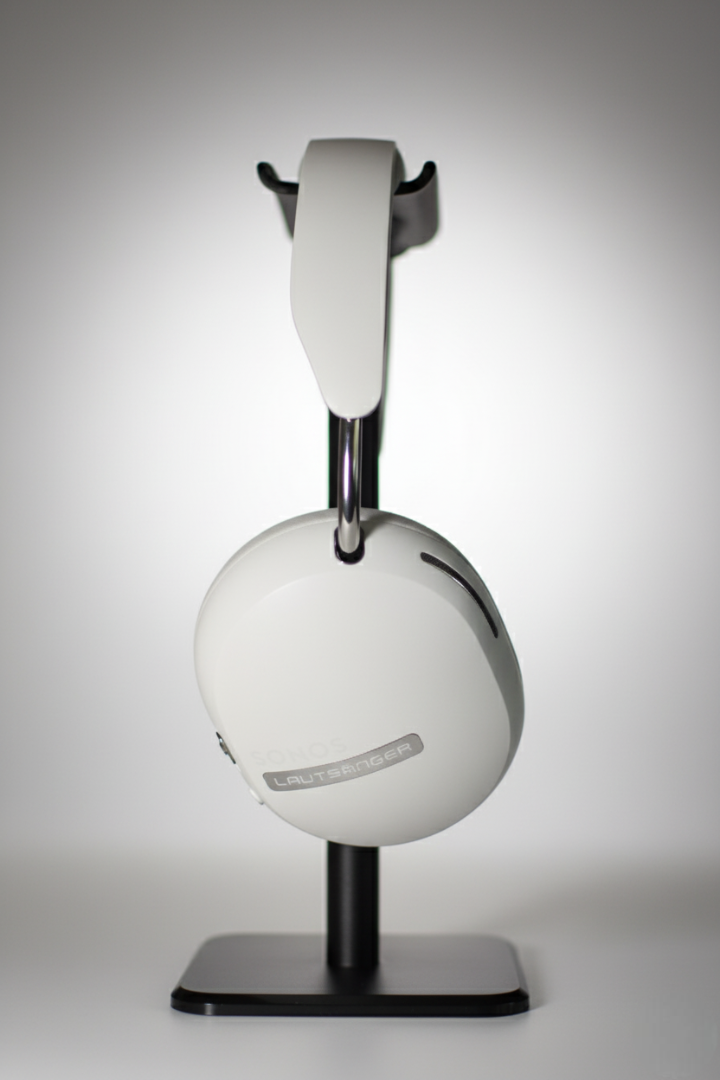
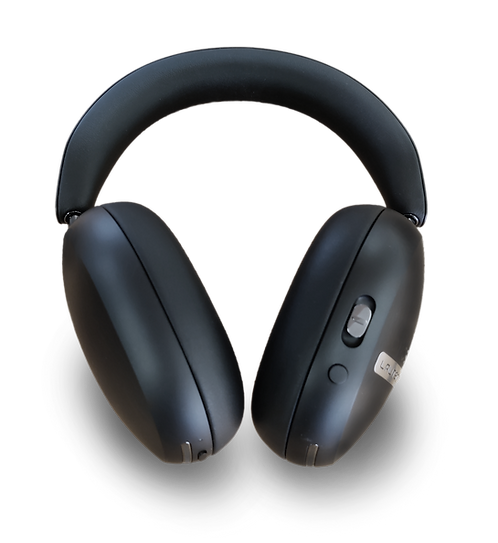
Five over-ear headphones in our line carry the Cymatic Organ modification. The Challenge is the wireless one. A Sonos Ace, opened at the manufactory, fitted with a hand-shaped Cymatic Organ near each driver, and resealed. Bluetooth, eight microphones, thirty-hour battery, ANC, Aware mode — all unchanged. The acoustics, restored.
Wireless. Cymatic Organ–modified.
The second half of sound — without the cable.

The detail that does the work.
Cymatic Organ
Hand-shaped wood. Positioned within millimetres of the driver.
Eight microphones
Voice over wind, room, and traffic.
Aware mode
Ambient sound, 1:1, returned to the room.
Thirty-hour battery
Three minutes of charging. Three hours of music.
A Sonos Ace, with the second half of sound restored.
We start with a Sonos Ace. We open it. Cymatic Organs are installed and tuned by hand at the manufactory in Hirschhorn am Neckar. Bluetooth 5.4. Eight high-performance microphones. Up to thirty hours of battery life. Active Noise Cancellation. Aware mode. Every electronic feature stays. The acoustics change.
- Modern Bluetooth specifically wired to neutralize the harmful effects of its frequency.
- Powerful noise cancellation, with intelligent Aware mode that returns ambient sound 1:1.
- Eight microphones for crystal-clear conversations and precise voice control, even in strong winds.
- Up to thirty hours of battery life — three minutes of charge gives three hours of sound.
The numbers
Acoustic
| Base platform | Sonos Ace |
|---|---|
| Drivers | Custom-tuned 40 mm dynamic, sealed back |
| Frequency response | 20 Hz – 25 kHz |
| Cymatic refinement | Cymatic Organ array, hand-positioned |
Connectivity & call quality
| Wireless | Bluetooth 5.4, multipoint |
|---|---|
| Wired | USB-C, 3.5 mm with adapter |
| Microphones | 8 high-performance MEMS |
| Compatibility | Apple, Android, Sonos app |
Battery & charging
| Battery life | Up to 30 hours |
|---|---|
| Quick charge | 3 min → 3 hours of playback |
| Charging port | USB-C |
In the box
| Headphones | Lautsänger Challenge — your chosen colour |
|---|---|
| Cable | 3.5 mm + USB-C |
| Case | Sonos travel case |
| Documentation | Listening guide, calibration card |
What ships when you say yes.
- Lautsänger Challenge — black or white $1,500
- Lautsänger calibration disc — 12 reference frequencies $95
- Premium travel case $240
- Lifetime trade-up enrolment $0
- 30-day listening trial $0
- Stack value $1,835
- Today $1,500
Single transaction at $1,500. The lines describe what ships and what protects you — not separate charges.
The 30-Day Listening Trial
Every Lautsänger ships with a 30-day listening trial. You are either hearing something you have never heard before — or you send it back. Full refund. One email.
Lifetime trade-up: 100% credit toward any higher Lautsänger tier within 24 months.
Common questions
Does Lautsänger build headphones?
No. Lautsänger is a sound technology — applied by hand to existing headphones. Think Dolby Stereo: Dolby never built theaters. They developed a way of processing sound that transformed what existing theaters could deliver. Lautsänger does the same for personal audio. The product is the Cymatic Organ modification, not the headphone itself.
How is this different from the Sonos Ace I can buy direct?
Identical electronics — Bluetooth, ANC, Aware mode, microphones, battery, call quality. Different acoustically. Each Challenge is opened, hand-fitted with a Cymatic Organ array at the manufactory in Hirschhorn am Neckar, Germany, and resealed.
Will I hear the difference?
Most listeners describe it the same way. Less push, more presence. The 30-day trial is built so you can find out at the volume you actually use, with the recordings you actually listen to. If it is not the pair, send it back.
Why this price?
The base unit, the hand-fitted modification at a small German workshop, the trial logistics, and the guarantee. We take on the cost if you decide it is not the pair.
What if I want to step up later?
Lifetime trade-up applies one hundred percent of your purchase price toward any higher Lautsänger tier — Journey, Explorer, Phoenix Set, or Scala — within twenty-four months.
Begin your 30-day trial.
Black or white. Either ships within five business days. The first listen is yours.