The closest a recording has come to live.
Used by performing artists and mastering engineers. The MEZE 99 Classic, hand-tooled to restore the second half of sound.

- Opera Magazine ORPHEUS
- RONDO
- HiFiTest
- Audiophil
A concert violinist describes it as a living instrument.
That is the line that comes back, in different words, from professional listeners. Concert violinists, composers, mastering engineers, soloists. They put on a pair of headphones fitted with Lautsänger Components and they hear something they have lived with for years as if for the first time.
“The Lautsänger headphones themselves become a living instrument.”
— Prof. Erik Schumann, HfMDK Frankfurt
The reason is not that the Explorer is more accurate. The reason is that it is more complete.
What live music does. What a recording cannot. Until now.
A great recording captures sound pressure. It can't capture Klangsog — the half that draws you in and opens the sound up. The room does that; the body does that — and when it's missing, you fill it in yourself, which is why long listening tires.
- 01
What the recording can't carry.
The microphone captures pressure. The DAC reconstructs pressure. The driver radiates pressure. At every link the second half is lost — your mind and body try to fill it in and that effort is why long listening tires.
- 02
Schalldruck — sound pressure.
The outward push of sound through the air toward your ear. The one principle every single headphone produces — including the MEZE 99 Classic this Explorer is built on.
- 03
Klangsog — sound-draw.
The vitalizing half of natural sound — what you feel hearing birdsong or ocean waves, that leaves you strengthened, energized. A bodily sensation not an emotional one. A real shared experience that is measurable. It's the half that no speaker or headphone can carry, until now.
- 04
The discovery.
Cymatics — the science of how sound vibrations shape matter into visible form — goes back to Ernst Chladni in 1787 and was extended by Hans Jenny in the twentieth century. An artist and researcher named Atmani spent years inside that science, asking how the missing half could be restored where recorded sound has only the push.
- 05
The Lautsänger Technology.
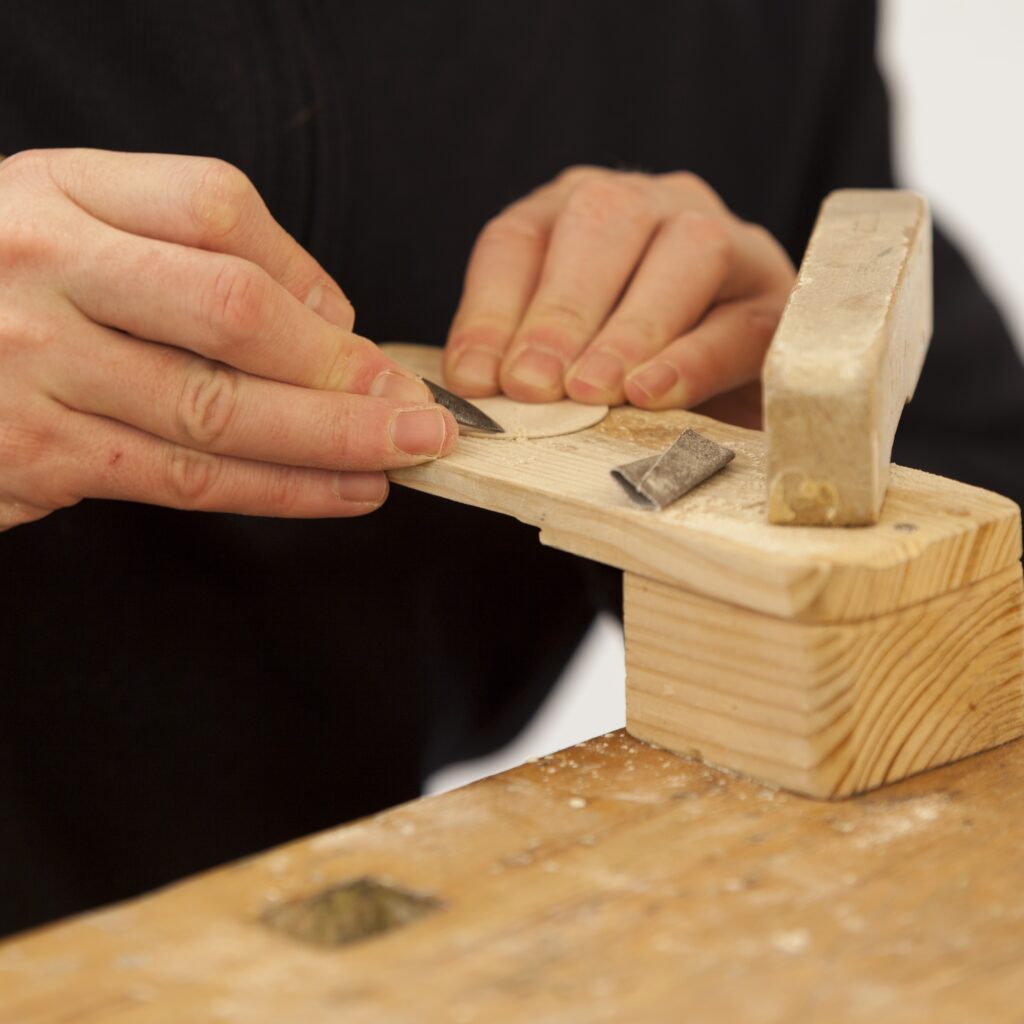
Atmani found that certain wooden forms, hand-positioned near each driver, let the missing half of living sound return — sounding components that complete what the speaker alone cannot. The technology is patented. The Explorer carries the hand-tooled tier — each Lautsänger Component shaped individually by the team, for the deeper resonance only handwork carries.
- 06
What it changes for a working ear.
The recording opens. The room around the recording opens. Performers separate. Reverb arrives at the right time. The imagining stops.

Like Dolby — different solution.

Dolby
Dolby did not build theaters or home stereos. Dolby developed a sound standard that transformed what existing equipment could deliver.

Lautsänger
Lautsänger does not build headphones. Lautsänger developed sounding forms — the Lautsänger Components — to restore the missing half of sound the speaker itself cannot deliver.
The product is the modification. Not the hardware. A developed solution to a hidden problem.
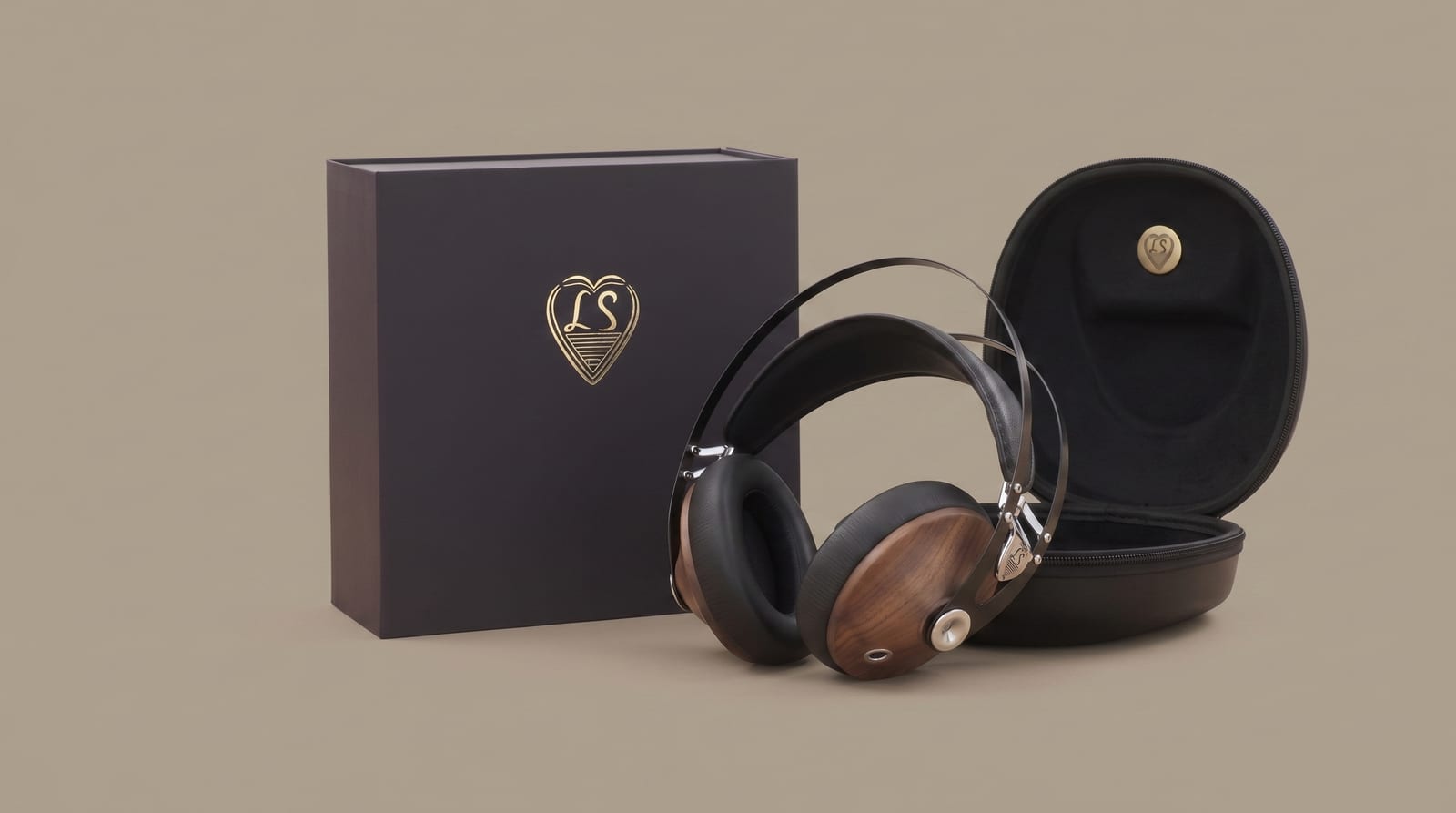
A MEZE 99 Classic, hand-tooled to restore the second half of sound.
- Hand-finished walnut cups, metal hardware, sustainably chosen materials.
- 1.2 m Kevlar-reinforced OFC cable with mic and remote, plus 3 m Kevlar-reinforced OFC reference cable.
- 6.3 mm gold-plated jack adapter and airplane jack adapter.
- Hard EVA carrying pouch, cable pouch.
- Fully serviceable — every component can be disassembled and replaced.
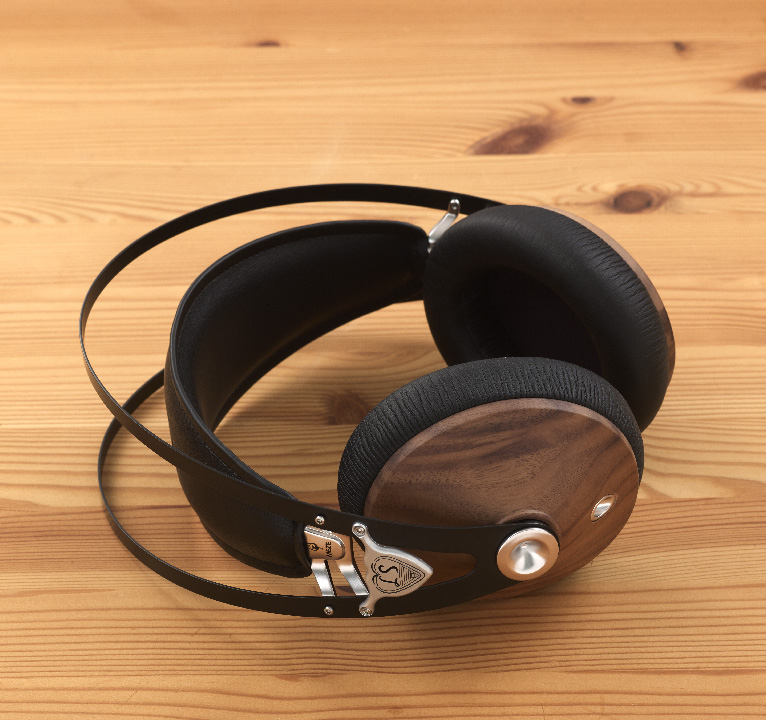
An instrument, finished by hand.
- Frequency response
- 15 Hz – 25 kHz
- Impedance
- 32 Ohms
- Sensitivity
- 103 dB · 1 kHz · 1 mW
- Weight
- 260 g
What listeners say. What the body shows.
-
The headphones reproduce things I've never heard before. They open up rooms and are incredibly vivid and dynamic — really impressive.
-
Every distance between performer and listener seems to dissolve into a feeling of closeness and connection.
-
The most immediate sound reproduction, which comes closest to the real experience of prime acoustic at the best place in the concert hall.
-
Both objects create a detachment from the transducer that is astonishing.
In an unpublished, double-blind randomized clinical study at University Medical Centre Mannheim (Heidelberg University), a 12-minute classical-music listening protocol produced significant reductions in arterial resistance index (median −1.7, p = 0.0008) and vascular age (median −2.3 years, p = 0.02) — only in the Lautsänger group.
The numbers
Acoustic
| Base platform | MEZE 99 Classic — walnut cups |
|---|---|
| Drivers | Dynamic 40 mm neodymium |
| Frequency response | 15 Hz – 25 kHz |
| Impedance | 32 Ohms |
| Sensitivity | 103 dB · 1 kHz · 1 mW |
| Nominal power | 30 mW |
| Maximum input power | 50 mW |
| Weight | 260 g |
| Modification | Lautsänger Components — hand-tooled, individually shaped |
In the box
| Cable (everyday) | 1.2 m Kevlar-reinforced OFC, mic and remote |
|---|---|
| Cable (reference) | 3 m Kevlar-reinforced OFC |
| Adapter | 6.3 mm gold-plated jack |
| Adapter | Airplane jack adapter |
| Case | Hard EVA carrying pouch |
| Cable pouch | Included |
Tonalitá is the exclusive North American distributor of Lautsänger. Every modification is done by hand, one pair at a time, at the Lautsänger manufactory in Hirschhorn am Neckar, Germany.
What ships when you say yes.
- Free Insured Shipping — a $60 value
- Free Returns within 30 days
- Walnut cups, two cables (1.2 m everyday + 3 m reference), 6.3 mm and airplane jack adapters, hard EVA case — included
- 30-day money-back guarantee
Single transaction at $2,500. The trade-up program applies 100% of this toward any higher Lautsänger model — including the Phoenix Sound System — within 12 months of purchase.

The 30-Day Listening Trial
Every Lautsänger ships with a 30-day listening trial. You are either hearing something you have never heard before — or you send it back. Full refund. One email.
Trade-up: 100% credit toward any higher Lautsänger model within 12 months.
Common questions
Does Lautsänger build headphones?
No. Lautsänger doesn't build headphones — it completes them. It's a sound technology, applied by hand to the speakers of headphones that already exist. The closest comparison is Dolby: Dolby never manufactured the hardware. It created a sound standard that transformed what existing equipment could deliver. Lautsänger does the same — but where Dolby worked on the electronic signal, Lautsänger works on the speaker itself, fitting it with its components. The product is the modification, not the headphone.
What is this second half of sound?
Think of how you feel hearing birdsong, or ocean waves. You don't take that in through your emotions — it reaches you another way, one that leaves the body strengthened and quietly energized. Most people have felt it; few recognize it, and fewer still can name it. That is sound-draw. It isn't the opposite of sound pressure, and it isn't a pull — it's closer to the drawing-in of a breath: a vitalizing quality we all know by experience but rarely stop to register. And it is real — not a mood, but something that can be observed and even measured.
A living sound carries it; an audio recording from speakers or headphones never does — they only ever produce sound pressure, which is why even excellent gear can leave the listening subtly tiring. Klangsog isn't generated electronically — it's allowed to happen, by Lautsänger's patented wooden components fitted to the speaker, so the missing half returns and you hear and your body registers the whole of what was originally there.
How does the Explorer differ from the Journey?
Same modification family. Different platform and different scope. The Journey is built on the MEZE 99 Neo, tuned for close-range, sit-down headphone listening. The Explorer is built on the MEZE 99 Classic — walnut cups — with hand-tooled Lautsänger Components, individually shaped for each unit. Both restore Klangsog to the driver. The Explorer's hand-tooling gives it the deeper resonance only handwork carries — the way a hand-crafted violin gives a player something a factory-built one doesn't, despite both being built to the same physical laws. Working professionals tend to choose the Explorer.
How is this different from a MEZE 99 Classic I can buy direct?
Acoustically and electronically, it is the same MEZE 99 Classic — the same drivers and the same hand-finished walnut build MEZE is known for. The decisive difference is in how the sound is experienced. Each pair is opened by hand at the Lautsänger manufactory in Hirschhorn am Neckar, Germany, fitted with Lautsänger Components, and carefully resealed. The modification lets the second half of sound — Klangsog, the sound-draw — return. Listeners describe the soundstage opening up: more space and depth around them, a sound that's easier to sink into, and a deeper sense of physical and mental relaxation. The headphone is available everywhere; the listening experience the Lautsänger Modification creates is available only through Lautsänger.
Is each Explorer hand-tuned individually?
Yes. The drivers and electronics are factory-precise. The Lautsänger Components are shaped and positioned by hand in Hirschhorn am Neckar, frequency by frequency. Like a hand crafted violin, every Explorer is built to the same standard, and carries its own signature. The making is not industrial.
Will I hear the difference?
What you perceive will depend partly on how sensitively and attentively you listen. Many people first notice the difference as something they feel: the sound seems less demanding, more spacious, and physically more relaxing — the soundstage opens up around them. Experienced musicians, conductors, and trained listeners, however, often hear a very distinct difference — an unusual clarity, transparency, and separation of detail that lets them follow individual instruments and lines even within complex orchestral recordings. For some the difference is first felt; for others, especially those with highly developed listening skills, it is unmistakably heard. In many cases it is both. The 30-day trial exists for exactly this question — built so you can find out for yourself, with nothing riding on it.
Why this price?
The science behind the Lautsänger Technology goes back generations — from Chladni's first studies of sound made visible in 1787, through Hans Jenny's cymatics research, to Atmani's work turning it into a working acoustic modification. That result is protected by patent — which is why the Lautsänger Modification is something no other manufacturer can offer. And every component is made and fitted by hand. Each wooden Lautsänger Component is precisely placed and affixed to the speaker — in the exact position, found by listening, that lets Klangsog happen. The Explorer carries the hand-tooled tier — each Lautsänger Component individually shaped, which takes the most patient work in the workshop, for the deeper resonance only handwork delivers. You're paying for what no other manufacturer can offer; the 30-day trial means you're not paying on a promise.
How does the 30-day trial work?
The trial runs for 30 days from the day your headphones arrive — enough time to live with them, not just demo them. If Lautsänger isn't for you, email us within those 30 days to start a return. We'll send a prepaid shipping label to print and affix to the package, and Tonalitá covers the return shipping; the one thing we ask is that the headphones come back in their original box. Return within the trial window and your refund is the full purchase price — the trial is built so the only thing you're risking is a little time.
Does the Lautsänger Modification affect the warranty? What is covered if something goes wrong?
The modification does not leave you in a gap between manufacturers. Once Lautsänger has completed the modification, it stands behind the finished headphone as a whole — electronics and Lautsänger Components included — with a one-year warranty. Each headphone is professionally opened, modified, tested, and resealed at the Lautsänger manufactory. As long as that seal remains intact, you have one point of contact: if something isn't right, email Tonalitá and we coordinate the warranty service with Lautsänger. Please note the warranty becomes void if the headphones are opened, altered, or repaired by the customer or by an unauthorized third party.
Where does it ship from, and how long does it take?
Every Lautsänger is made to order. The moment you purchase, your headphones are hand-fitted with Lautsänger Components at the manufactory in Hirschhorn am Neckar, Germany — they aren't pulled from a shelf, they're built for you. Once the work is done, the unit comes to Tonalitá and ships to you from within the US. On average, plan on about two weeks from order to delivery. It's a short wait for something hand-made — and it's the reason every unit is exactly what it should be.
Can I trade up to a Phoenix later?
Yes. The trade-up program applies 100% of your purchase price toward any higher Lautsänger model — including the Phoenix Sound System — within 12 months.
Begin your 30-day trial.
Start with an Explorer. Made to order. About two weeks to delivery. The first listen is yours.