The headset for the meeting that won't end.
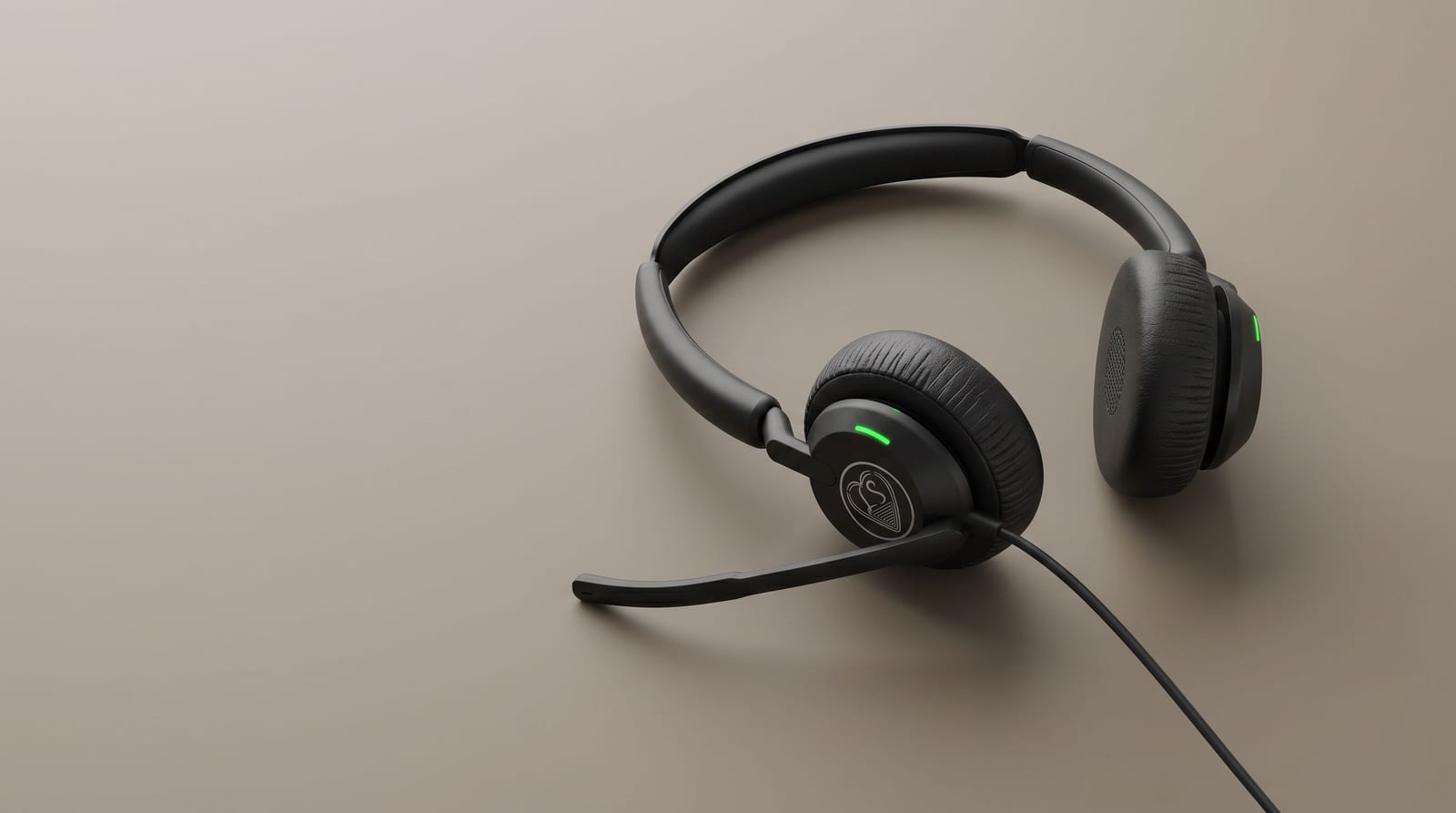
A Jabra Engage 50 II, modified with Lautsänger Components. The voice you hear sounds present. The eighth call costs the same as the first.

- Microsoft Teams
- Zoom
- Google Meet
- Cisco
- Unify
- Amazon Chime
- Chromebook
Eight hours of meetings. The body knows.
The schedule shows nine calls. By the third one, the headset feels heavier. By the sixth, you are leaning back, asking people to repeat. By the eighth, your body is exhausted.
Computer headsets reproduce voice cleanly. None of them return the second half of how a voice actually arrives. Lautsänger Components do.
Why a day on calls wears you down — and what the Lautsänger Modification changes.
A live voice does two things: it reaches your ear, and it draws you in. A headset gives you the first and drops the second. Your brain works harder to fill in what's missing — and by the eighth call you feel it.
- 01
The cost over a day
Without that second half, your brain compensates — meeting after meeting, the effort adds up. By late afternoon, the same call takes more out of you than it did at 9 a.m.
- 02
Schalldruck — sound pressure
The outward push of sound through the air to your ear. Every voice headset produces it — the Jabra Engage 50 II as cleanly as any on the market.
- 03
Klangsog — sound-draw.
The vitalizing half of natural sound — the difference between a voice in the room with you and the same voice through a speaker. It isn't sound pressure, and it isn't a pull: closer to the drawing-in of a breath. It's what makes a voice present and placed in front of you instead of crowding inside your head — the half no headset can carry, until now.
- 04
The discovery
Cymatics — the science of how sound vibrations shape matter into visible form — goes back to Ernst Chladni in 1787 and was extended by Hans Jenny in the twentieth century. An artist and researcher named Atmani spent years inside that science, asking how the missing half could be restored where recorded sound has only the push.
- 05
The Lautsänger Technology — in a corporate headset
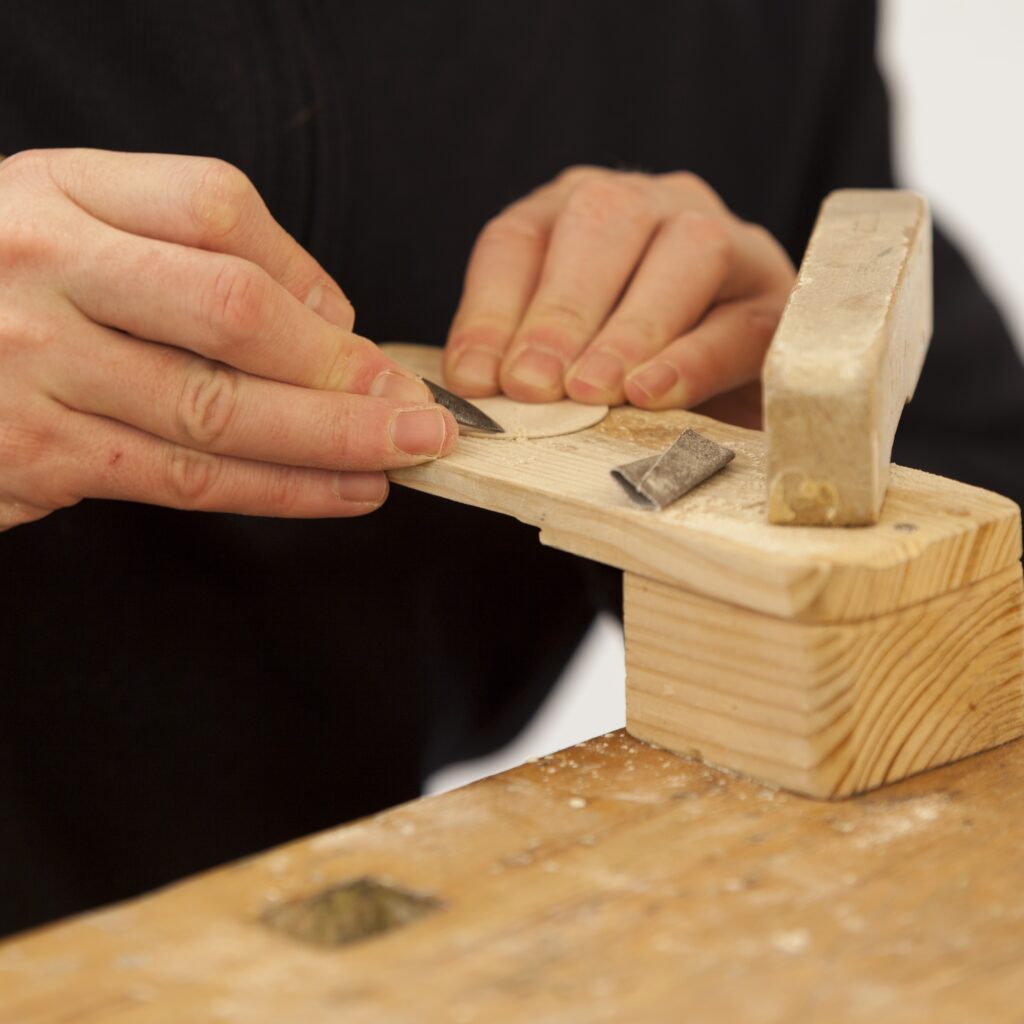
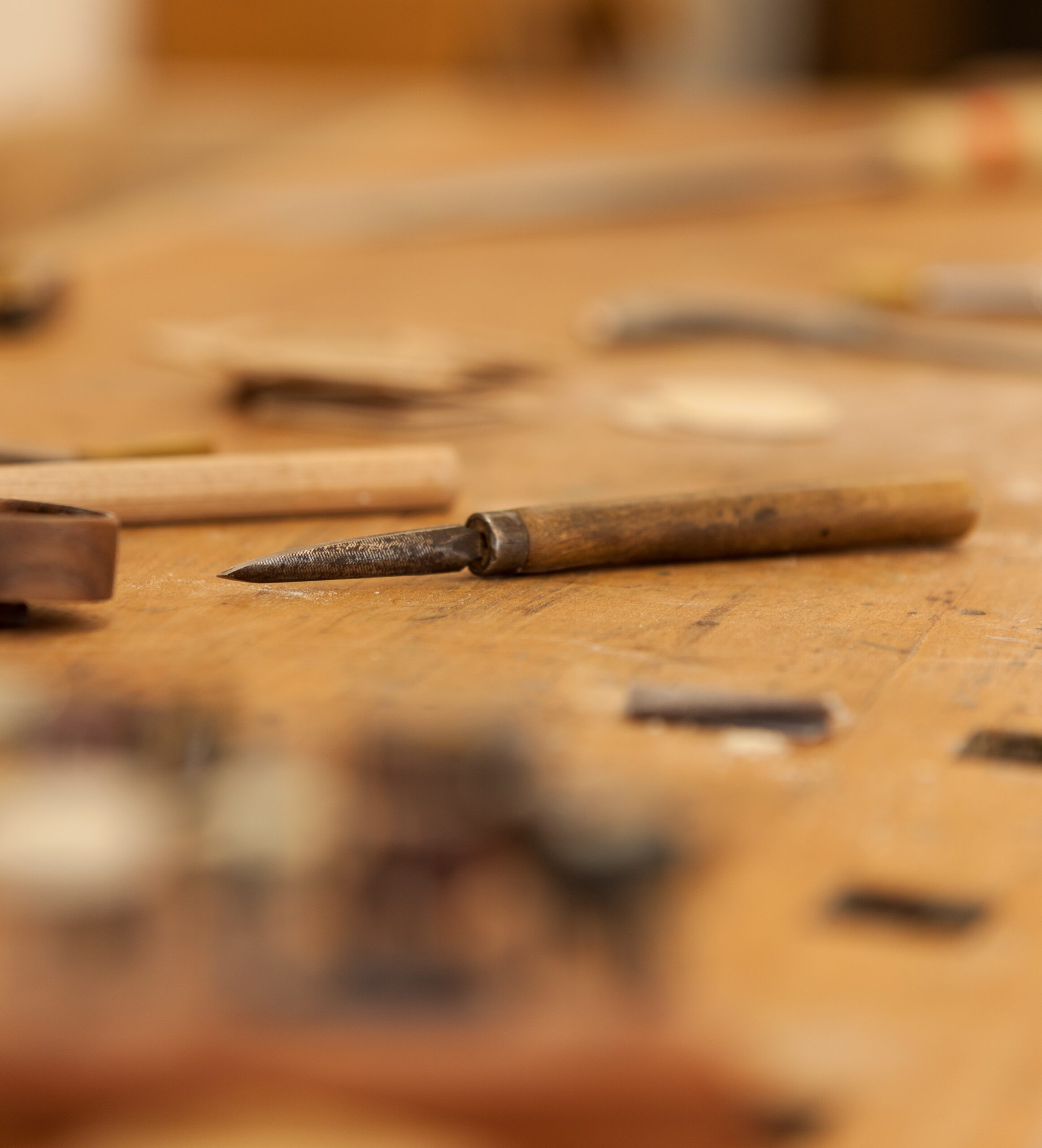
Atmani found that certain wooden forms, hand-positioned near the speaker driver, let the missing half of living sound return — sounding components that complete what the speaker alone cannot. The technology is patented. In the Viv, the Lautsänger Component does the same work it does in every Lautsänger product — restores Klangsog to the speaker. What's different is the platform: a Jabra Engage 50 II built for the day on calls. The microphones, hearing protection, and wired call quality of the Jabra remain untouched.
- 06
What changes for you
Voices sound like people, not signals. Meeting after meeting, the listening cost drops. By the end of the day, you have something left.

Like Dolby — different solution.

Dolby
Dolby did not build theaters or home stereos. Dolby developed a sound standard that transformed what existing equipment could deliver.

Lautsänger
Lautsänger does not build headphones. Lautsänger developed sounding forms — the Lautsänger Components — to restore the missing half of sound the speaker itself cannot deliver.
The product is the modification. Not the hardware. A developed solution to a hidden problem.
A Jabra Engage 50 II, modified for the day on calls.
- Three MEMS microphones — voice over wind, room, and traffic.
- Jabra SafeTone 2.0, PeakStop 105 hearing protection. Compliant with EU Occupational Noise Directive, OSHA, G616.
- Certified for Microsoft Teams, Zoom, Google Meet, Cisco, Unify, Amazon Chime, and Chromebook.
- For computer use only. Requires Jabra Direct (Windows or macOS).
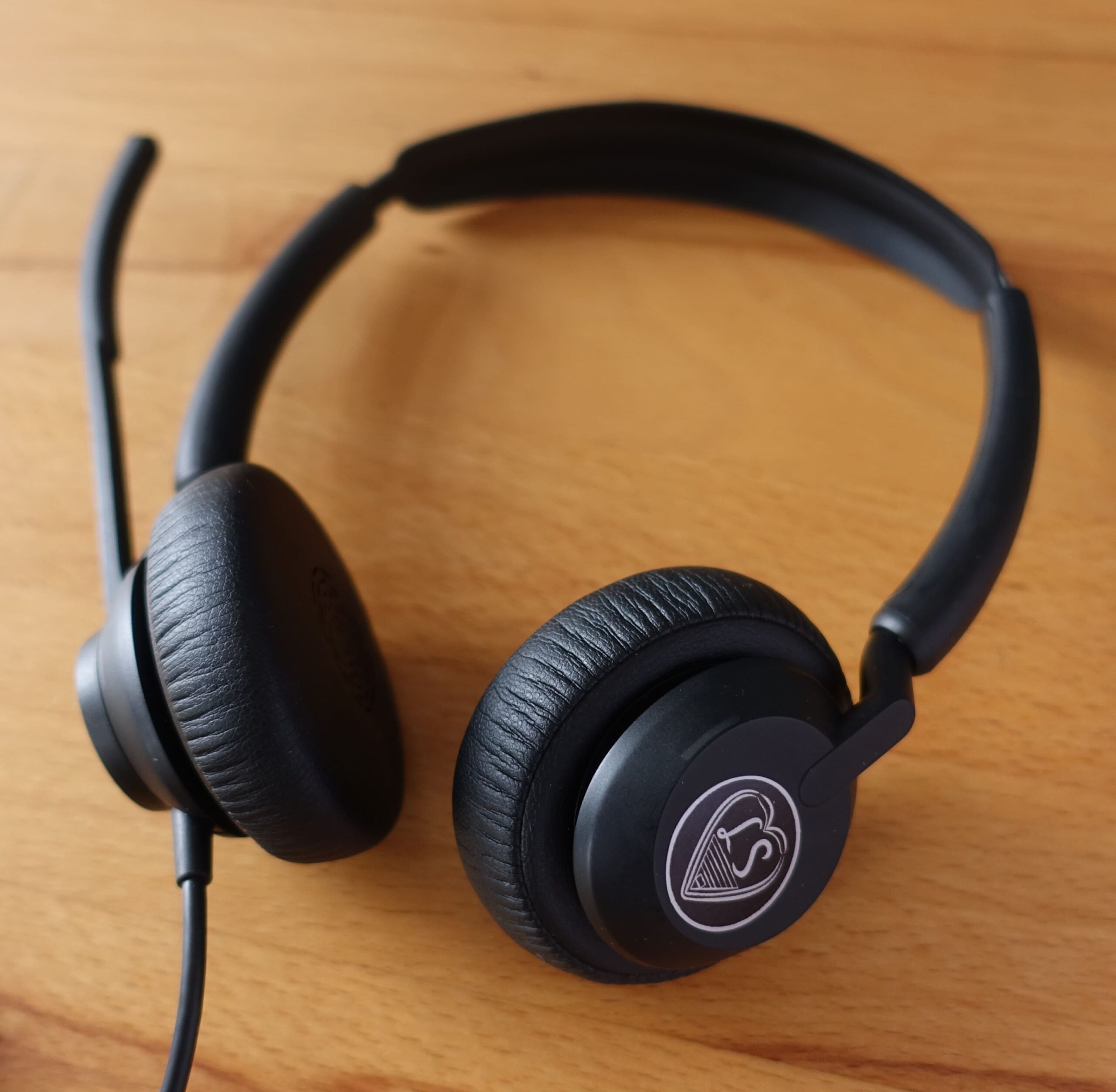
The modification is acoustic. Not electronic.
- Speaker
- 20 mm · 30 mW
- Bandwidth
- 50 Hz – 20 kHz
- Microphones
- 3 MEMS
- Trial
- 30 days
What listeners say. What the body shows.
-
The investment in Lautsänger headphones can be called a preventive health measure without any exaggeration.
In an unpublished, double-blind randomized clinical study at University Medical Centre Mannheim (Heidelberg University), a 12-minute classical-music listening protocol produced significant reductions in arterial resistance index (median −1.7, p = 0.0008) and vascular age (median −2.3 years, p = 0.02) — only in the Lautsänger group.
The numbers
Audio
| Base platform | Jabra Engage 50 II |
|---|---|
| Speaker | 20 mm dynamic |
| Maximum input power | 30 mW |
| Bandwidth | 50 Hz – 20 kHz |
| Modification | Lautsänger Component — precisely shaped, hand-positioned |
Microphone
| Microphones | 3 MEMS |
|---|---|
| Background-noise suppression | Multi-mic beamforming |
Hearing protection
| Jabra SafeTone 2.0 | Active limiting |
|---|---|
| PeakStop | 105 dB ceiling |
| Compliance | EU Occupational Noise Directive · OSHA · G616 |
Compatibility
| Platforms | Microsoft Teams, Zoom, Google Meet, Cisco, Unify, Amazon Chime, Chromebook |
|---|---|
| Connection | USB-A or USB-C, computer use only |
| Software | Requires Jabra Direct (Windows or macOS) |
Tonalitá is the exclusive North American distributor of Lautsänger. Every modification is done by hand, one pair at a time, at the Lautsänger manufactory in Hirschhorn am Neckar, Germany.
What ships when you say yes.
- Free Insured Shipping — a $60 value
- Free Returns within 30 days
- Jabra Engage 50 II base with Lautsänger Components, USB cable, carrying pouch — included
- 30-day money-back guarantee
Single transaction at $595. The trade-up program applies 100% of this toward Journey, Challenge, or Explorer within 12 months of purchase.

The 30-Day Listening Trial
Every Lautsänger ships with a 30-day listening trial. You are either hearing something you have never heard before — or you send it back. Full refund. One email.
Trade-up: 100% credit toward any higher Lautsänger model within 12 months.
Common questions
Does Lautsänger build headphones?
No. Lautsänger doesn't build headphones — it completes them. It's a sound technology, applied by hand to the speakers of headphones that already exist. The closest comparison is Dolby: Dolby never manufactured the hardware. It created a sound standard that transformed what existing equipment could deliver. Lautsänger does the same — but where Dolby worked on the electronic signal, Lautsänger works on the speaker itself, fitting it with its components. The product is the modification, not the headphone.
What is this second half of sound?
Think of how it feels when someone speaks to you across the room — and how different the same voice is coming through a speaker. You don't take a living voice in through just your emotions; it reaches you another way, one that asks less of you and leaves you less drained. Most people have felt it; few recognize it, and fewer still can name it. That is sound-draw. It isn't the opposite of sound pressure, and it isn't a pull — it's closer to the drawing-in of a breath: a vitalizing quality we all know by experience but rarely stop to register. And it is real, observable and can even be measured.
A living voice carries it; a call through any speaker or headset never does — it only ever produces sound pressure, which is why even a clear connection can leave you tired after a long day of calls. Klangsog isn't generated electronically — it's allowed to happen, by Lautsänger's patented wooden components fitted to the speaker, so the missing half returns and a voice arrives present and placed in front of you, rather than crowding inside your head.
Is the Viv for music?
The Viv is built for calls — the Jabra Engage 50 II platform is engineered for voice. But the Lautsänger Component inside does the same work it does in every Lautsänger product, so music sounds great on the Viv too. It's not a replacement for a dedicated music headphone (the platform isn't music-grade — you'll want the Journey for that), but it's a real bonus for music at your desk while you work.
How is this different from the Jabra Engage 50 II I can buy direct?
Electronically, it is the same Jabra Engage 50 II — the same microphones, controls, and call performance. The difference is in how voices are experienced. Each headset is opened by hand at the Lautsänger manufactory, fitted with Lautsänger Components, and resealed. The modification lets the second half of sound — Klangsog, the sound-draw — return, so voices arrive present and placed in front of you rather than crowding inside your head: easier to follow, and noticeably less tiring across a long day of calls. The headset is available everywhere; the listening experience is available only through Lautsänger.
Does it work with my conferencing platform?
Yes — Microsoft Teams, Zoom, Google Meet, Cisco, Unify, Amazon Chime, and Chromebook are all certified by Jabra. The Lautsänger Modification does not change the certification.
Why is it computer-only?
The Jabra Engage 50 II is a wired computer headset by design — it requires Jabra Direct on Windows or macOS to manage call quality and firmware. The Lautsänger Modification preserves that constraint.
Will I hear the difference?
What you perceive will depend partly on how sensitively and attentively you listen. Many people first notice the difference as something they feel: voices seem less demanding and more present, and a long day of calls leaves them less drained — the sound opens up around them rather than crowding inside their head. Others, especially trained and attentive listeners, hear a very distinct difference — voices arrive present and distinct, easier to follow through a long day of calls. For some it is first felt; for others it is unmistakably heard. In many cases it is both. The 30-day trial exists for exactly this question — built so you can find out for yourself, with nothing riding on it.
Why this price?
The Jabra Engage 50 II platform, the hand-installation of a precisely shaped Lautsänger Component, and the 30-day trial. The work happens at a small manufactory in Hirschhorn am Neckar, one unit at a time, by the team Atmani founded. The Lautsänger Technology is protected by patent — which is why it's something no other manufacturer can offer. You're paying for what the Engage 50 II cannot deliver on its own.
How does the 30-day trial work?
The trial runs for 30 days from the day your headphones arrive — enough time to live with them, not just demo them. If Lautsänger isn't for you, email us within those 30 days to start a return. We'll send a prepaid shipping label to print and affix to the package, and Tonalitá covers the return shipping; the one thing we ask is that the headphones come back in their original box. Return within the trial window and your refund is the full purchase price — the trial is built so the only thing you're risking is a little time.
Does the Lautsänger Modification affect the warranty? What is covered if something goes wrong?
The modification does not leave you in a gap between manufacturers. Once Lautsänger has completed the modification, it stands behind the finished headset as a whole — electronics and Lautsänger Components included — with a one-year warranty. Each headset is professionally opened, modified, tested, and resealed at the Lautsänger manufactory. As long as that seal remains intact, you have one point of contact: if something isn't right, email Tonalitá and we coordinate the warranty service with Lautsänger. Please note the warranty becomes void if the headset is opened, altered, or repaired by the customer or by an unauthorized third party.
Where does it ship from, and how long does it take?
Every Lautsänger is made to order. The moment you purchase, your headphones are hand-fitted with Lautsänger Components at the manufactory in Hirschhorn am Neckar, Germany — they aren't pulled from a shelf, they're built for you. Once the work is done, the unit comes to Tonalitá and ships to you from within the US. On average, plan on about two weeks from order to delivery. It's a short wait for something hand-made — and it's the reason every unit is exactly what it should be.
Can I trade up to a music headphone later?
Yes. The trade-up program applies 100% of the Viv price toward Journey, Challenge, or Explorer within 12 months of purchase.
Begin your 30-day trial.
Start with a Viv. Made to order. About two weeks to delivery. The first listen is yours.